
Freeze-drying, also known as lyophilization, is a low-temperature dehydration process that involves freezing a product and removing ice through sublimation (turning ice directly into vapor). It’s becoming a strong trend in food technology and biotechnology, since it allows bio-preservation, protecting the molecular integrity of heat-sensitive compounds in food and medicine without chemical additives.
In the following analysis, Linknovate’s data reveals a sector that is not only growing, but also becoming increasingly innovative.
A Decade of Growth in Lyophilization R&D
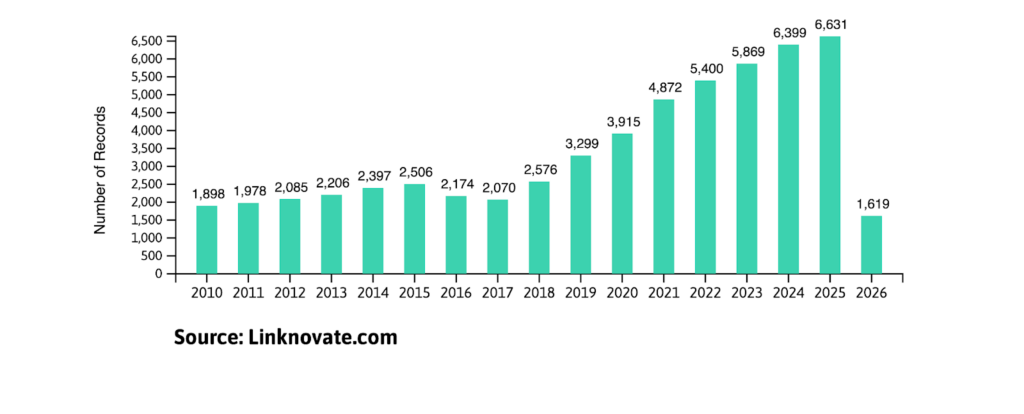
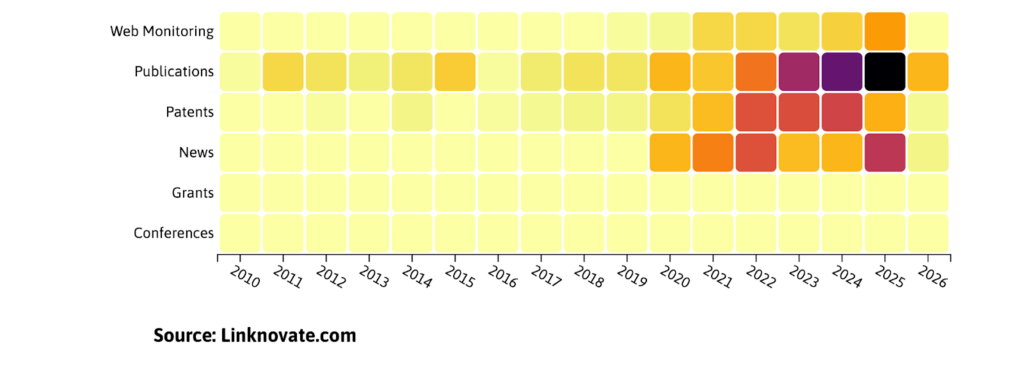
R&D in lyophilization has seen constant year-on-year growth over the past decade (Linknovate data). What was once a niche technique for astronaut food has become a cornerstone of modern biotechnology.
This steady climb is driven by the demand for “clean label” products and the surge in complex biologics, such as mRNA vaccines and lipid nanoparticles, that require extreme stability.
A Highly Academic Sector
Despite its industrial scale, lyophilization remains a knowledge-heavy field. This suggests that we are still in a “discovery phase” regarding process optimization. Linknovate metrics show:
- 69.35% of all lyophilization innovation records are scientific publications.
- 48.18% of R&D lyophilization leaders are universities and research centers.
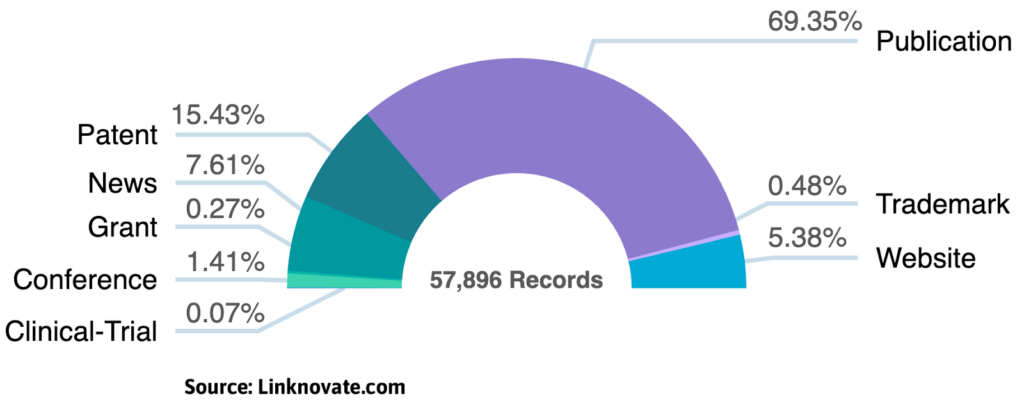
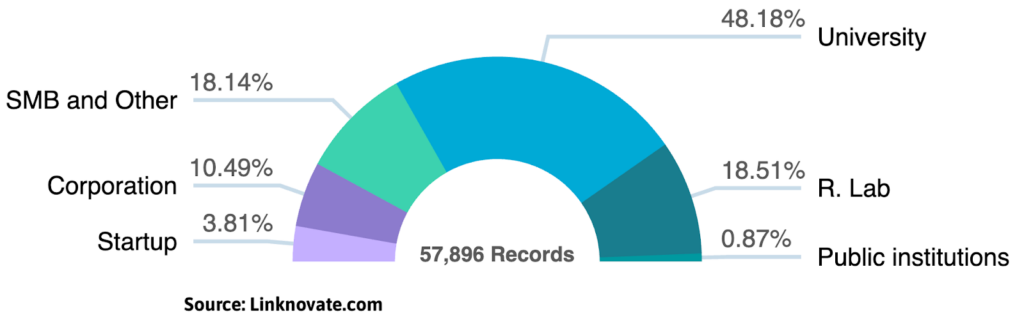
This indicates a massive opportunity for technology transfer in lyophilization innovation.
Global Leadership: The Map of Innovation in Lyophilization
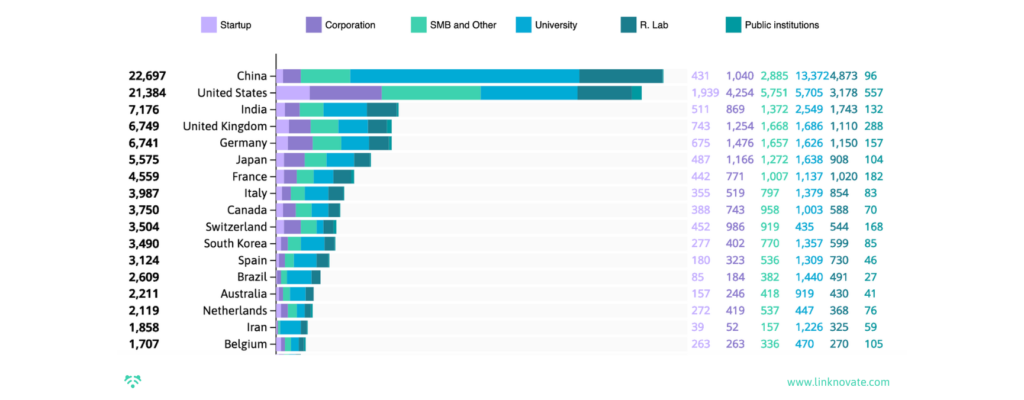
The geography of freeze-drying R&D is shifting. While Western markets traditionally led in pharma, the current landscape shows a new hierarchy:
- China: The undisputed global leader in R&D lyophilisation volume. Organizations like Tofflon Science and Technology and the Chinese Academy of Sciences are focusing on industrial scaling for the agri-food and traditional medicine sectors.
- United States: A powerhouse in high-end biopharma, spearheaded by institutions like MIT and companies like SP Industries, focusing on “Smart Lyophilization.”
- India: A rising hub for sterile manufacturing and CDMO (Contract Development and Manufacturing) excellence. Institutions like the National Institute of Pharmaceutical Education and Research (NIPER) and leaders like Intas Pharmaceuticals are pioneering optimized cycles for complex plasma proteins and affordable biologics.
The “Blue Frontier” and Beyond: Emerging Trends in Lyophilization
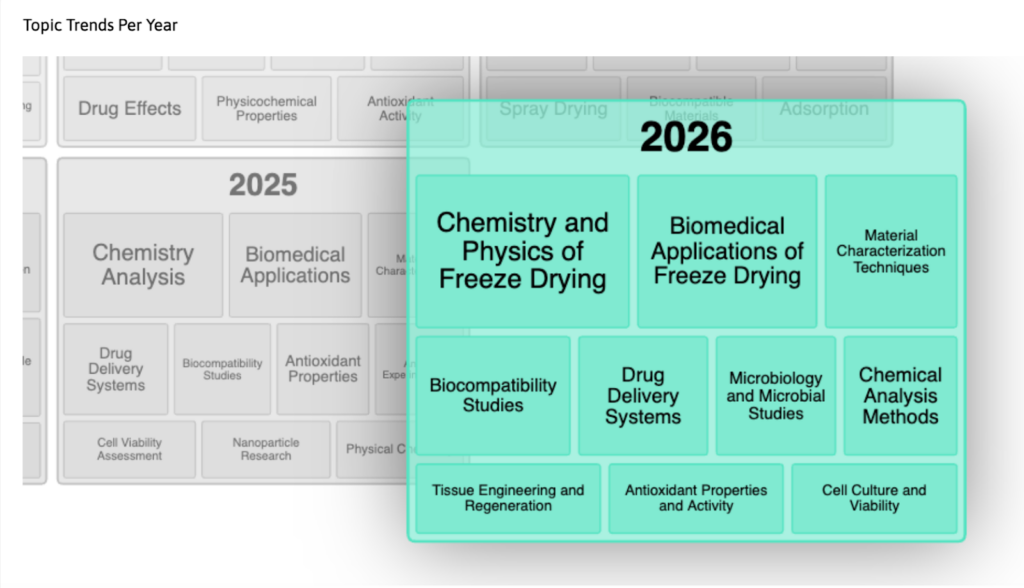
Lyophilization has long been the gold standard for high-end pharmaceuticals. But Linknovate’s recent data also indicate that R&D is currently happening at the intersection of sustainability and high-value bio-ingredients. As we move into 2026, several key trends are defining the future of the sector.
1. The Algae Revolution: Preserving the “Blue Bio-factories”
One of the most exciting frontiers identified in recent R&D is the lyophilization of algae (including both macroalgae/seaweed and microalgae like Spirulina and Chlorella). Algae are essentially “bio-factories” for high-value compounds like omega-3 fatty acids and powerful antioxidants, but these molecules are extremely heat-sensitive.
- Superior Nutrient Retention: A 2025 study in Taylor & Francis demonstrates that lyophilization is significantly superior to traditional sun drying or oven drying for maintaining the antioxidant capacity and phenolic content in seaweed.
- Phycocyanin Integrity: For the natural food coloring market, the stability of blue pigments is vital. Research in the International Journal of Food Science highlights that freeze-drying is currently the only viable industrial method to prevent the thermal degradation of phycocyanins, ensuring the vibrant color and functional benefits remain intact.
2. The mRNA & Biologics Surge
Following the success of lipid nanoparticle (LNP) technologies, the pharmaceutical sector is doubling down on “Cold Chain Independence.” Linknovate has tracked a surge in patents and publications related to the lyophilization of mRNA-based therapeutics.
3. “Active” Freeze-Drying & Micro-granulation
Traditional “tray” freeze-drying is notoriously slow and energy-intensive. A major trend involves moving toward agitated or spray-freeze drying (SFD) to create better-performing powders.
- Innovators at Work: Companies like Hosokawa Micron are leading the way with Active Freeze Drying. This method uses a stirred vacuum chamber to produce free-flowing, dust-free granules. This is particularly crucial for the solubility of probiotic powders and sensitive nutraceuticals.
4. Sustainable “Clean Label” Food Tech
In the food sector, lyophilization is the primary tool for the “Clean Label” movement. By removing water via sublimation, manufacturers can create snacks and ingredients that are shelf-stable without preservatives.
- Recent Projects: Initiatives like Galylio are emerging to avoid fresh products waste. By transforming seasonal surpluses into high-value, nutrient-dense powders, these projects are effectively closing the loop in the circular food economy.
Top Institutions to Watch
If you are looking for partners in lyophilization, these are the current leaders in the academic-industrial bridge:
- Politecnico di Torino (Italy): Leading research in the mathematical modeling of thermal interactions and AI-driven “digital twins” for cycle optimization.
- Chinese Academy of Sciences (China): The global leader in biological tissue sublimation kinetics and industrial-scale applications for medicine and agri-food.
- University of Connecticut (USA): A cornerstone of pharmaceutical lyophilization research. Home to the CPPR (Center for Pharmaceutical Processing Research), which bridges the gap between lab-scale discovery and FDA-compliant manufacturing.
- Purdue University (USA): Home to LyoHUB, a premier university-industry consortium dedicated to advancing the science of freeze-drying. Purdue is currently pioneering radio-frequency (RF) assisted lyophilization to reduce drying times by up to 50%.
- Ghent University (Belgium): A global leader in continuous manufacturing. Their Laboratory of Pharmaceutical Process Analytical Technology is renowned for developing spin-freeze-drying. It is a revolutionary approach that replaces traditional batch processing with a high-speed, continuous flow.
Top Lyophilization Startups to Watch (The 2026 Disruptors)
While established giants dominate the infrastructure, these agile startups are currently redefining the efficiency and application of freeze-drying:
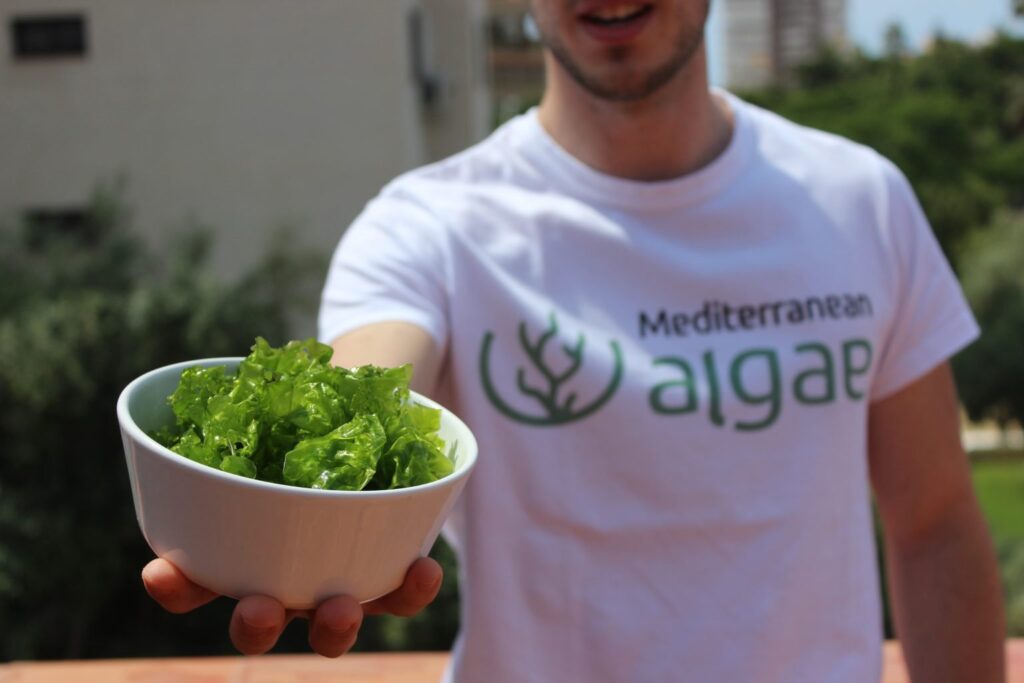
- Mediterranean Algae (Spain): A rising star in the “Blue Economy” (and winner of the BlueInvest Awards 2026). They integrate the cultivation of macroalgae with advanced processing. The company creates high-value biomass for the cosmetics and nutraceutical industries, specifically focusing specifically on the retention of delicate marine bioactives.
- RheaVita (Belgium): A spin-off from Ghent University, RheaVita is commercializing continuous freeze-drying technology. Their “spin-freeze-drying” system allows for individual vial processing, which provides unprecedented uniformity and significantly reduces time-to-market for high-value biologics.
- Liocreo (Italy): A disruptor in the agri-food and pharma sectors, Liocreo has developed a unique patented technology that consumes 75% less energy than traditional freeze-dryers. Their systems focus on high-quality dehydration that maintains organoleptic properties while making the process economically viable for larger-scale sustainable food production.
- Lyocontract (Germany): While operating as a highly specialized CDMO, Lyocontract is a key player to watch in 2026 as they finalize a €50M expansion of their sterile freeze-drying facilities. They are at the forefront of the “academic-to-industrial” bridge, scaling complex biotech products from clinical trials to commercial volumes.
Lyophilization Market Outlook 2026
As we move through 2026, the global lyophilization market is projected to reach new heights, driven by a critical transition from “batch processing” to “continuous, AI-optimized production.” With a sector valuation now comfortably exceeding $8.5 billion, the focus has shifted toward energy efficiency and the stabilization of complex biopharmaceuticals and sustainable “blue” ingredients like algae.
To stay ahead in this fast-moving sector, organizations must closely watch the players successfully bridging the gap between academic discovery, which still accounts for nearly 70% of industry records, and real-world industrial integration.
Stay Ahead in Lyophilization with Linknovate
The freeze-drying landscape is moving faster than traditional market reports can track. Are you relying on lagging indicators, or are you seeing R&D moves before they happen?
Use Linknovate’s discovery engine to cut through the noise. Identify the emerging startups leading the “Blue Frontier,” track competitors “stealth” pivots in mRNA stabilization, and map the entire global ecosystem, from the academic hubs of the US to the industrial giants of China, in seconds. Don’t just watch the future of preservation; own your place in it.