
As we move into 2026, the global innovation landscape continues to shift, presenting both complex challenges and massive new frontiers for growth. Industry leaders and forward-thinking entrepreneurs are asking: which technologies will define this year? Which startups are truly ready to disrupt established markets? At Linknovate, we’ve utilized our proprietary scouting tool, InnoScout, and our AI research assistant, InnoPilot, to identify the 50 most promising startups to watch in 2026.
These companies are carefylly selected for their recent “innovation signals” like significant funding rounds, strategic grants, and major product launches. To guide you through this landscape, we have categorized these pioneers into seven key sectors:
- Manufacturing
- Energy
- Quantum Computing
- Bio-tech & Pharma
- Health-tech
- Food-tech
- Ag-tech
Ready to see who is shaping 2026? Here is a preview of the breakthrough innovation featured in our report. For the complete list and detailed analysis, download the full report here.

MANUFACTURING & ROBOTICS STARTUPS
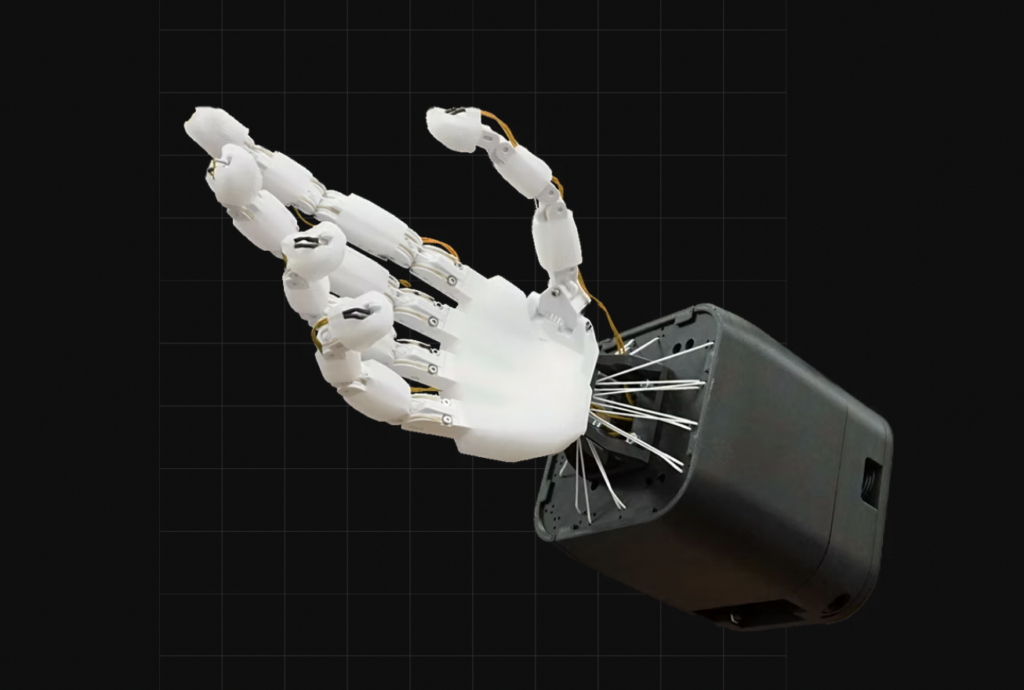
The manufacturing sector is entering a new era of “Physical AI”. Leading the charge is Mimic Robotics, a Swiss startup using generative AI to create robotic hands with human-like dexterity. Meanwhile, in Italy Generative Bionics, a spin-off from the Italian Institute of Technology, is starting industrial testing of their humanoid robots.
Cleantech is also a strong trend, with Italian Arsenale Bioyards pushing biomanufacturing and Estonian UP Catalyst turning CO₂ into carbon nanomaterials and graphite.
We are also seeing a massive leap in in-space manufacturing. Dcubed (Germany) is preparing for its 2027 mission to manufacture a 15-meter solar array directly in orbit, while Space Forge (UK) successfully demonstrated its returnable satellite concept for producing high-performance materials like semiconductors in microgravity.
Beyond robotics, cleantech and space, a new wave of advanced manufacturing startups is emerging across Europe. In the UK, Holdson is redefining industrial hardware with modular manufacturing systems for flexible production. RIIICO is focusing on next-generation industrial automation to improve real-time decision-making on the factory floor. Meanwhile, Barcelona-based Theker is pushing the boundaries of materials and process innovation, developing scalable manufacturing technologies aimed at reducing energy use in manufacturing.
ENERGY & DECARBONIZATION STARTUPS
Sustainability remains the primary driver for energy innovation, with several players redefining how we produce, store, and manage power. Aepnus is scaling its circular economy solution by recovering materials from battery factory wastewater, while Hutanbio is developing low-carbon biofuels. In Spain, Tether is turning the electric vehicle fleet into the “world’s largest connected battery” to stabilize the power grid. This mission is complemented by Voltfang, which deploys large-scale battery systems to accelerate the energy transition.
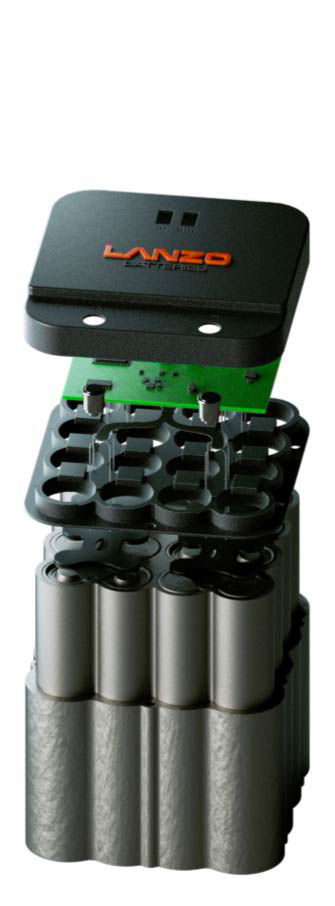
Advancements in battery technology are further accelerated by Lanzo Batteries, a CIDETEC spin-off that partnered with Galician UARX Space to launch and test its technology aboard the OSSIE OTV satellite platform. Nyobolt is pushing boundaries with ultra-fast-charging batteries that reach 80% charge in under five minutes. Enpal continues to lead in solar energy solutions. Supporting this infrastructure, Optics11 provides advanced fiber-optic sensing to monitor critical assets like high-voltage transformers, and Sunfire is industrializing electrolysis to produce renewable industrial gas and fuel.
QUANTUM COMPUTING STARTUPS
Quantum computing is a strong innovation trend. From drug discovery to secure communications, these startups are leading the charge in this field. Aquark Technologies is specializing in miniaturized quantum sensing and vacuum technology, making quantum devices more portable for field use. Similarly, Kvantify is bridging the gap between life sciences and quantum mechanics. Their platform integrates classical and quantum algorithms to dramatically accelerate computational drug discovery, having recently demonstrated its scalability by running a FAST-VQE algorithm on 50 qubits on IQM’s Emerald quantum computer.
Another Spanish powerhouse, Multiverse Computing, is a global leader in quantum-inspired software. It focuses on delivering high-performance solutions for the finance and manufacturing sectors. Meanwhile, PASQAL is leveraging Nobel Prize-winning technology to develop a full-stack quantum computer built with neutral atoms in 2D and 3D arrays. They recently achieved a major milestone by delivering a 100-qubit analog quantum computer to the Jülich Supercomputing Centre. They also partnered with IBM to integrate quantum and classical hardware.
In the medical field, QT Sense is pioneering quantum sensing for biomedical research by using nanodiamonds to monitor cellular activity. Finally, UbiQD is transforming light optimization by using quantum dots to enhance plant growth and solar panel efficiency. Their copper- and indium-based materials are safer and cheaper to produce, supported by recent Series B funding.
BIO-TECH & PHARMA STARTUPS
Bio-tech is rapidly moving from lab-scale breakthroughs to commercially scalable materials, therapies, and platforms. Modern Synthesis is pioneering the growth of nanocellulose fibers from bacteria to create biomaterials for the fashion and textile industries. In drug discovery, Cellbox Labs is scaling its organ-on-a-chip technology, producing miniature replicas of human organs that enable faster, more ethical testing without animal models. Arsenale Bioyards can also be included in the biotech sector, as it is applying precision fermentation to slash biomanufacturing costs by up to 90%.

At the frontier of data and biology, Catalog is commercializing DNA data storage encoding digital information into synthetic DNA for long-term storage with minimal energy use.
In advanced therapeutics, Integra Therapeutics is developing next-generation gene writing technologies that enable safer and more precise genome engineering, while Tilt Biotherapeutics is advancing oncolytic virus therapies designed to activate the immune system directly within tumors.
Extending biotech beyond Earth, Varda Space is leveraging microgravity manufacturing to produce high-value pharmaceutical and biotech materials in orbit, boosted by a $187M Series C funding.
HEALTH-TECH STARTUPS
Medical technology is becoming increasingly precise, minimally invasive, and autonomous, driven by advances in robotics, neurotechnology, and AI. For instance, Precision Neuroscience recently published successful human study results for its Layer 7 Cortical Interface. It’s a next-generation brain-computer interface designed to restore motor function in patients with paralysis. Also in neuro-rehabilitation, Phantom Neuro is designing neural interfaces to restore intuitive control for prosthetic limbs. Additionally, the company is backed by $19M in fresh funding led by prosthetics leader Ottobock.
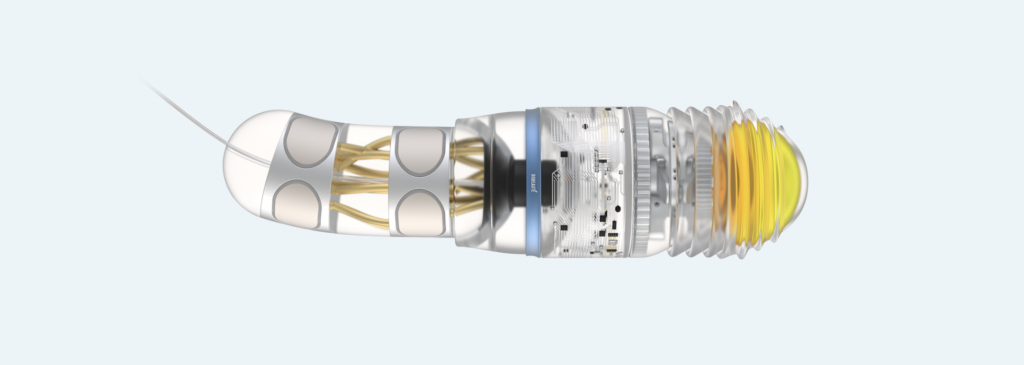
In neurosurgery, Robeauté is developing rice-sized microrobots. These tiny bots can deliver targeted therapies directly to tumors, hence reducing the need for open surgery.
For vision care, IXI (by Pixieray) is launching the world’s first autofocus smart glasses. Meanwhile, Eyebot is developing autonomous robotic eye exams boosted by $20M in Series A.
Across surgical and clinical workflows, robotics is rapidly moving from assistance to autonomy. For example, Mendaera reportedly completed the world’s first clinical procedures with its Focalist handheld surgical robotic system. Vitestro, on the other hand, is redefining routine care with the world’s first autonomous robotic phlebotomy device.
Finally, Proton Intelligence is applying advanced sensing and robotics to develop next-generation medical systems. Specifically, they are developing the first on-demand, real-time potassium monitoring device, pushed by $6.95M in seed funding.
FOOD-TECH STARTUPS
The future of food is more sustainable and efficient than ever. Revyve is using mechanically processed yeast to produce clean-label, allergen-free proteins to replace eggs in commercial baking and sauces, while Saveggy has launched a plant-based, plastic-free edible coating specifically for cucumbers to extend shelf life.
In the industrial sector, AtmosZero is decarbonizing the brewing industry with 650-kilowatt pilot boiler systems that reduce emissions.
Diversifying the plant-based market, Rival Foods is utilizing high-moisture extrusion technology to create whole-cut plant-based meat alternatives that mimic the texture of chicken and beef. Rounding out this circular approach, Volare is transforming food industry side streams into high-quality protein and oils using black soldier fly larvae, offering a sustainable alternative for animal feed and pet food. Meanwhile, Finnish startup Enifer is scaling up its production of PEKILO® mycoprotein. It’s a sustainable protein source derived from upcycled dilute side streams of the food industry.
AG-TECH & FARMING STARTUPS

In agriculture, some innovative startups are tackling methane emissions in cattle. ArkeaBio is developing a vaccine to target methanogenic microbes, while Hoofprint Biome uses microbiome-targeting enzymes to lower methane production and improve nutrient absorption. For precision farming, Constellr is providing high-resolution thermal infrared data from its own microsatellites to help farmers optimize water and resource management through global land surface temperature monitoring. Arborea is industrializing photosynthesis with its Biosolar Leaf™ technology to cultivate microorganisms that sequester CO2 without requiring fertile land.
Adding to these efforts, Dryad Networks is strengthening environmental protection by deploying large-scale IoT sensor networks designed for ultra-early wildfire detection. Their patented solar-powered “Silvanet” sensors can detect fires within minutes, even in remote areas, by “smelling” hydrogen and carbon monoxide before flames spread. Meanwhile, NitroVolt is revolutionizing sustainable farming by enabling on-site fertilizer production. Their “Nitrolyzer” units use only air, water, and electricity to synthesize green ammonia, allowing farmers to reduce their reliance on the carbon-heavy industrial supply chain.

Want to discover more game-changing startups?
Innovation doesn’t stop with these 50 companies. Whether you are looking for the next big disruptor in Deep Tech, Climate-tech, or Life Sciences, Linknovate provides real-time data on thousands of emerging players worldwide.